

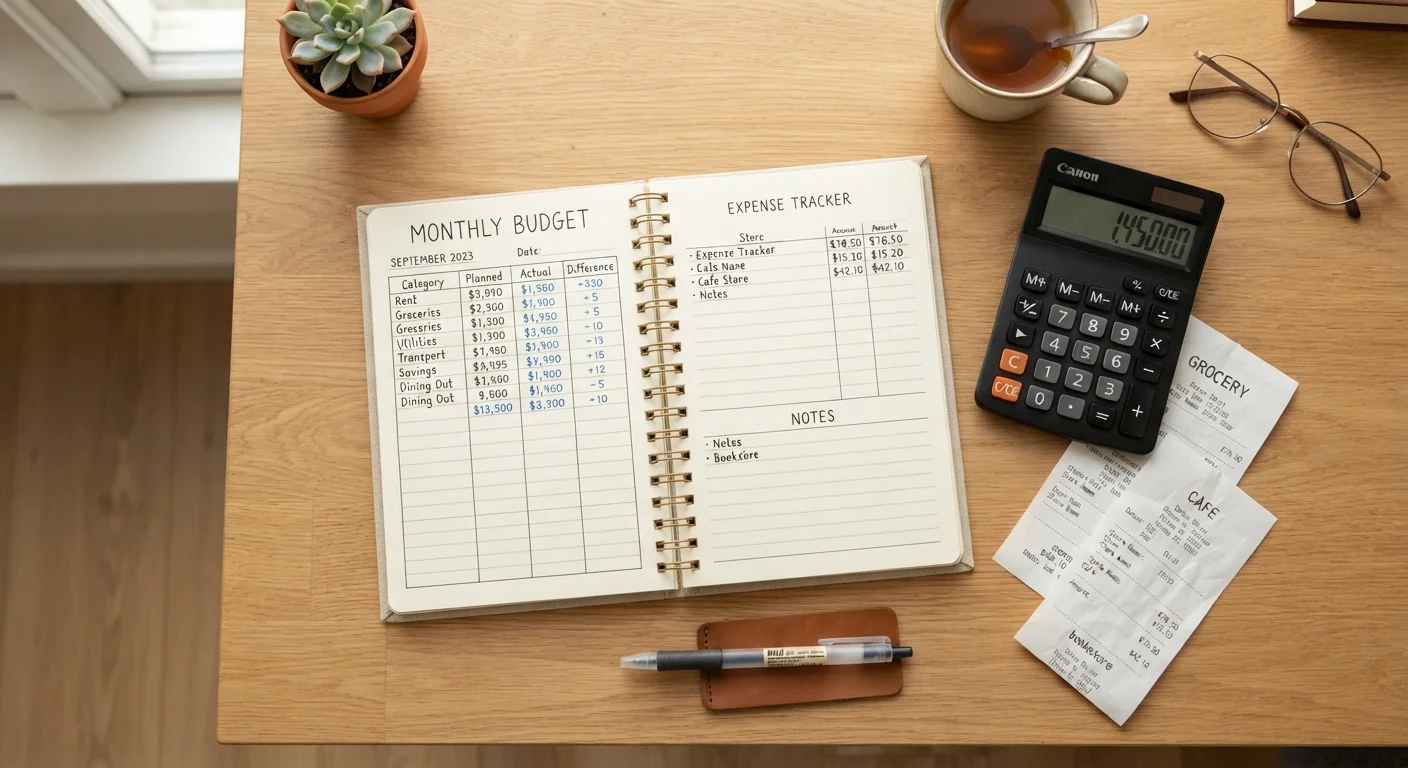
Why a budget starts with income, not expenses
Most people begin budgeting by listing what they spend. That approach misses the constraint that makes a budget functional: how much money actually comes in. Before writing down a single expense, identify your monthly take-home pay across all income sources. Include wages, freelance payments, gig income, and any recurring transfers from other sources.
If your income varies, use a conservative baseline, such as your three lowest paychecks averaged. Planning against a floor means you will not over-commit in a slow month. When you earn above that floor, you can direct the surplus deliberately rather than watching it disappear.
Take-home pay
The amount deposited into your account after taxes and other payroll deductions. This is the number a budget must be based on, not your gross salary.
Fixed expense
A cost that stays the same amount each month, such as rent or a loan payment. These are easier to plan around because the amount does not change.
Variable expense
A cost that changes month to month, such as groceries, gas, or dining out. These categories give you the most flexibility when trimming spending.
Zero-based budget
A method where you assign every dollar of income to a specific category so that income minus all allocations equals zero. Nothing is left unassigned.
Discretionary spending
Money spent on wants rather than needs, such as entertainment or subscriptions. This category is usually the first place people look when trying to reduce expenses.
Budget variance
The difference between what you planned to spend in a category and what you actually spent. Tracking variance each month shows where your plan and reality diverge.
Two people with identical salaries can have very different take-home amounts depending on benefit elections, retirement contributions, and tax withholding. Always use the number that lands in your account, not the figure on your offer letter.
Categorizing your expenses
Expenses fall into two practical groups. Fixed expenses stay the same each month: rent, a car loan payment, a phone plan, or a health insurance premium. Variable expenses shift: groceries, gas, dining, clothing, and entertainment. Most overspending happens in variable categories because the amounts feel negotiable in the moment.
A working set of categories for a first budget might include: housing, transportation, food (groceries separately from dining out), utilities, insurance, debt payments, personal care, subscriptions, and savings. Keep the list manageable. Too many categories create friction; too few hide where money actually goes.
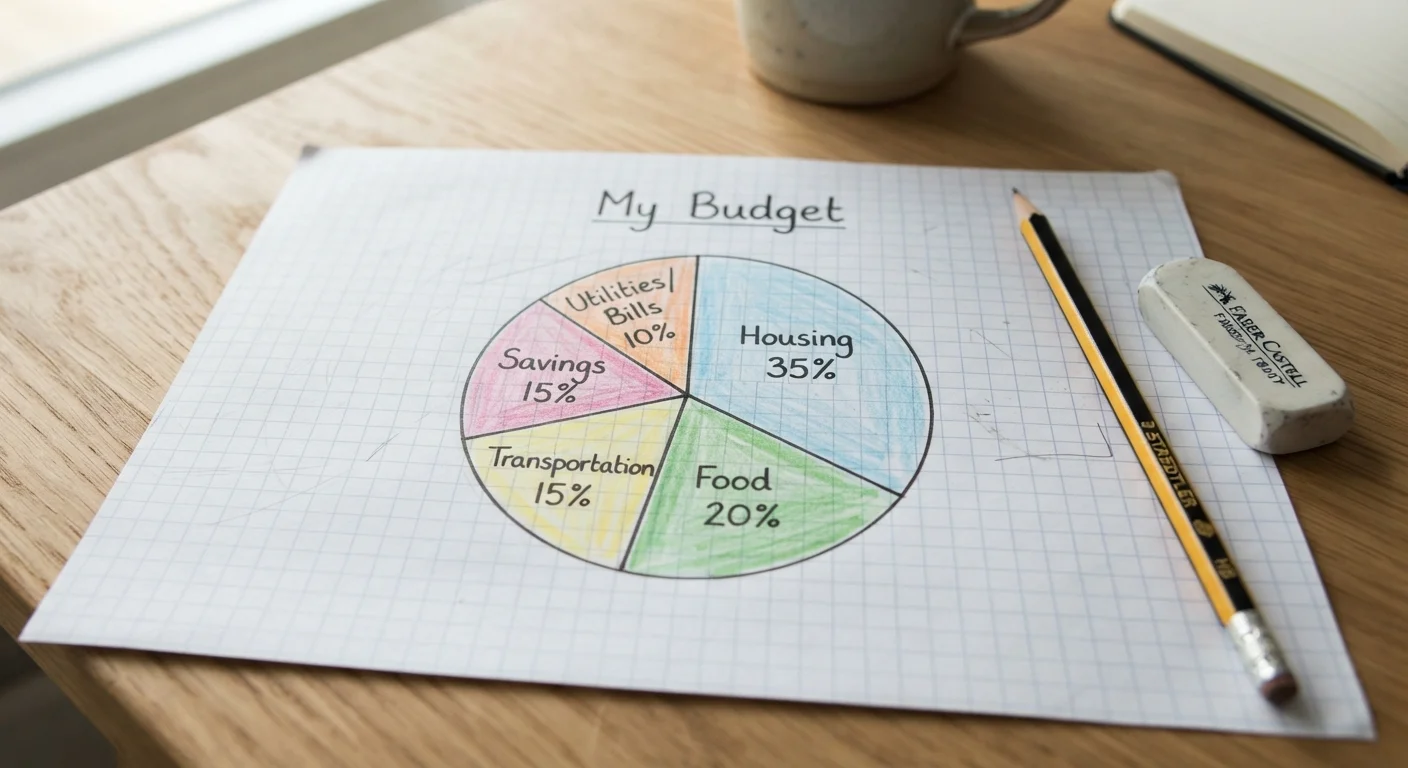
Utilities deserve their own line because they fluctuate with season and usage. If you want to understand what drives those costs, a room-by-room breakdown of utility expenses can help you spot patterns.
Irregular expenses catch new budgeters off guard
Annual or semi-annual bills, such as car registration, insurance premiums, or holiday spending, do not appear in a typical monthly snapshot. Divide the annual total by 12 and include that amount as a monthly line item so the money is ready when the bill arrives.
Choosing a budgeting method
No single method suits everyone. The goal is to find a structure you will actually follow.
The 50/30/20 method allocates roughly 50% of take-home pay to needs, 30% to wants, and 20% to savings and debt repayment. It is simple and forgiving. The percentages are guidelines, not hard rules, and work best when your income comfortably covers basic expenses.
The zero-based method assigns every dollar to a category until the difference between income and allocations is zero. Nothing sits unassigned. This approach requires more time but produces a precise plan. It suits people who want full control over where each dollar goes.
The envelope method (or its digital equivalent) sets a cash limit for each variable category. When the envelope is empty, spending in that category stops for the month. It is direct and tangible, which makes it useful for categories where overspending is habitual.
If you use a debit or credit card for daily purchases, understanding how each tool affects your spending habits matters before picking a method. Comparing debit and credit cards for everyday spending covers the practical differences.
Track spending before you build a budget
If you have never tracked your spending, review two to three months of bank and credit card statements before setting category amounts. Real spending history produces more accurate budget figures than estimates made from memory.
Building your first spending plan
With income confirmed, categories defined, and a method chosen, write your first plan. List each category and assign a dollar amount. The total of all allocations should not exceed your take-home pay. If it does, you have a gap to close before you start the month, not after.
When building initial amounts, use actual transaction history rather than guesses. Reviewing two or three months of statements will surface both typical spending and irregular costs you might otherwise forget. Expenses like car insurance, if paid semi-annually, need to be divided by six and included monthly so the money accumulates before the bill arrives.
A budget also needs a savings line, even a small one. Savings is not what is left over; it is an allocation made before discretionary spending is assigned. Building credit from scratch and managing a budget share a common foundation: consistent, deliberate decisions made ahead of time rather than in the moment.
Keeping the budget working
A first budget is rarely accurate. Expenses you forgot to include will appear, and some allocations will be too low or too high. That is expected. The plan becomes more accurate over time as you track real spending against it each month.
A monthly review compares what you planned against what you spent in each category. Categories that run over consistently need their amounts raised or their spending reduced. Categories that consistently have surplus can be redirected toward savings or debt. A structured monthly check-in makes this review faster and harder to skip.
When your financial situation changes, update the budget immediately: a new job, a rent increase, a paid-off debt, or a new subscription all shift the numbers. If your budget begins to feel disconnected from your actual life, signs your budget needs a tune-up can help you identify what to revisit.
This article is general financial information
The guidance here is educational and applies broadly. It is not personalized financial advice. For decisions specific to your income, debt, or savings goals, consider speaking with a licensed financial adviser or nonprofit credit counselor.
This article is for general informational purposes only and does not constitute personalized financial advice. Consult a licensed financial professional for guidance specific to your situation.