

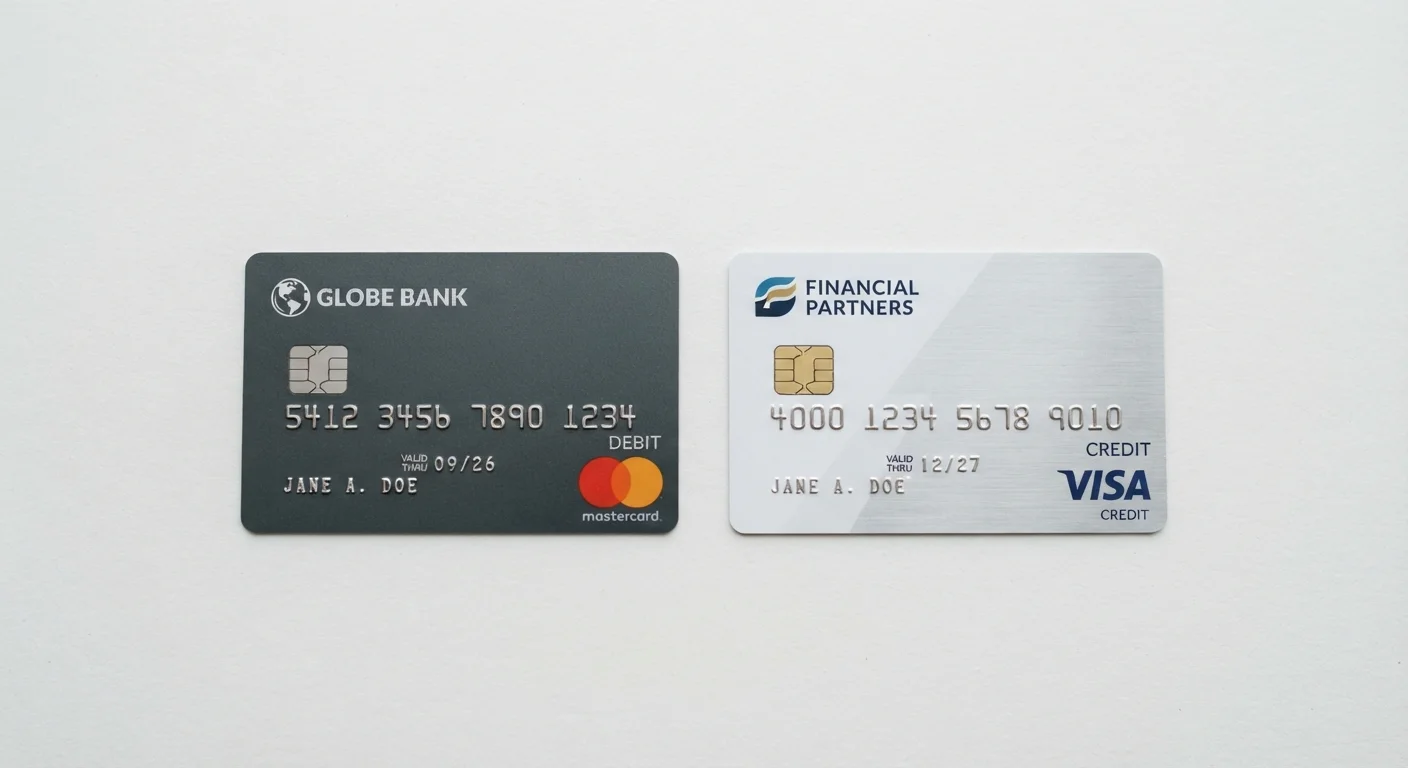
How each card type works
A debit card pulls money directly from a linked checking account at the moment of purchase. When you swipe or tap, the funds leave your account immediately, or within one business day. There is no bill to pay later because the transaction settles against money you already have.
A credit card works differently. The card issuer pays the merchant on your behalf, and you repay the issuer, usually on a monthly cycle. If you pay the full statement balance by the due date, no interest applies. If you carry a remaining balance, the issuer charges interest, typically expressed as an annual percentage rate (APR).
Both card types run on major payment networks, so they are accepted at most U.S. retailers, online stores, and service providers. The practical difference is timing: one spends existing funds, the other borrows against a credit limit.
Fraud protection and liability
Federal law treats the two card types differently when unauthorized charges appear.
Under the Fair Credit Billing Act (FCBA), credit card holders are liable for no more than $50 in fraudulent charges, and many issuers voluntarily offer $0 liability. Disputes must generally be filed within 60 days of the statement date, and the issuer investigates while you are not required to pay the disputed amount.
Debit cards fall under the Electronic Fund Transfer Act (EFTA). Your liability depends on how quickly you report the problem. Report within two business days and your liability is capped at $50. Wait up to 60 days after your statement is sent and the cap rises to $500. After 60 days, you may bear the full loss. Because the funds are already gone from your account during an investigation, a fraudulent debit transaction can disrupt bill payments or cause overdrafts while you wait for resolution.

This distinction matters most for online purchases, travel bookings, and any situation where you might not notice an unauthorized charge immediately.
Spending control and budgeting
Debit cards create a natural ceiling: once your balance reaches zero, transactions decline (unless you have opted into overdraft coverage, which can carry its own fees). This makes debit a straightforward tool for people who want purchases tied directly to what they have on hand.
Credit cards do not have that automatic stop. Spending up to a credit limit is easy, and a bill arrives later. For anyone still building budgeting habits, that gap between purchase and payment can obscure how much is actually being spent. The practical framework for monthly budgeting covers how to track spending categories regardless of which card type you use.
| Feature | Debit card | Credit card | |
|---|---|---|---|
| Funds source | Your checking account balance | Issuer's credit line, repaid later | |
| Fraud liability (federal law) | Up to $500 if reported late | Capped at $50; many issuers offer $0 | |
| Effect on credit history | None | Positive if paid on time | |
| Interest charges | None | Applies if balance is carried | |
| Rewards programs | Rare, limited | Common on many cards | |
| Spending ceiling | Your account balance | Your credit limit | |
| Overdraft risk | Yes, if opted into overdraft | No; separate from bank account |
If you already follow a spending plan and pay your balance in full each month, a credit card adds consumer protections without a cost. If your spending tends to exceed your plan, a debit card removes the mechanism that makes overspending easy.
Credit history and rewards
Debit card use does not appear on your credit report. Responsible credit card use, meaning on-time payments and low balances relative to your credit limit, can build a positive credit history over time. A credit history affects your ability to qualify for loans, rent an apartment, or sometimes even pass an employer background check.
Many credit cards also return a percentage of spending as cash back or points. Those returns only represent a net gain if you avoid interest charges. The math reverses quickly when a balance carries over at a double-digit APR. For a clearer picture of how credit card mechanics actually work, see common credit card myths that can cost you money.
Some cardholders use reward credit cards for everyday categories like groceries or gas, then pay the balance in full each month. That approach captures rewards without interest costs, but it requires consistent follow-through on repayment. If you are curious how points can accumulate over time through ordinary purchases, earning travel rewards without flying explains the mechanics.
Choosing based on your situation
There is no single answer that fits everyone. A few questions can help clarify which tool fits your current habits.
- Do you pay bills on time and in full? A credit card's protections and potential rewards become accessible without interest costs.
- Do you sometimes spend more than planned? A debit card limits that exposure automatically.
- Are you building credit from scratch? Responsible credit card use is one path to establishing a credit file, though secured credit cards and credit-builder loans are other options worth exploring with a financial professional.
- Are you concerned about fraud recovery time? A credit card dispute leaves your bank balance intact while the issuer investigates; a debit card dispute may temporarily reduce your available funds.
If your budget has gaps or you notice recurring shortfalls, signs your budget needs a tune-up can help identify where to look before choosing a payment method.
This article is for general informational purposes only and does not constitute personalized financial or legal advice. Consult a licensed financial professional for guidance specific to your circumstances.