


Why insurers look at credit history
Auto insurers price policies based on how likely a given driver is to generate a claim. Traditionally, that meant looking at driving record, vehicle type, and location. Over time, many insurers added credit history to that mix after internal studies suggested a statistical relationship between certain credit patterns and claim frequency.
The practice is general financial information, not a judgment about your character, and what follows is an explanation of how it works, not personalized financial or insurance advice. Terms vary by insurer and state, and reading actual policy documents or talking with a licensed insurance agent is the right step for your specific situation.
If your premium went up without any change in your driving habits, factors beyond credit can also play a role. See why car insurance rates can increase without any fault of your own for a broader breakdown.
How a credit-based insurance score is built
A credit-based insurance score (CBIS) pulls data from the same credit file a lender would see, but the mathematical model is different. Scoring companies weight the inputs to reflect claim behavior rather than loan repayment behavior.
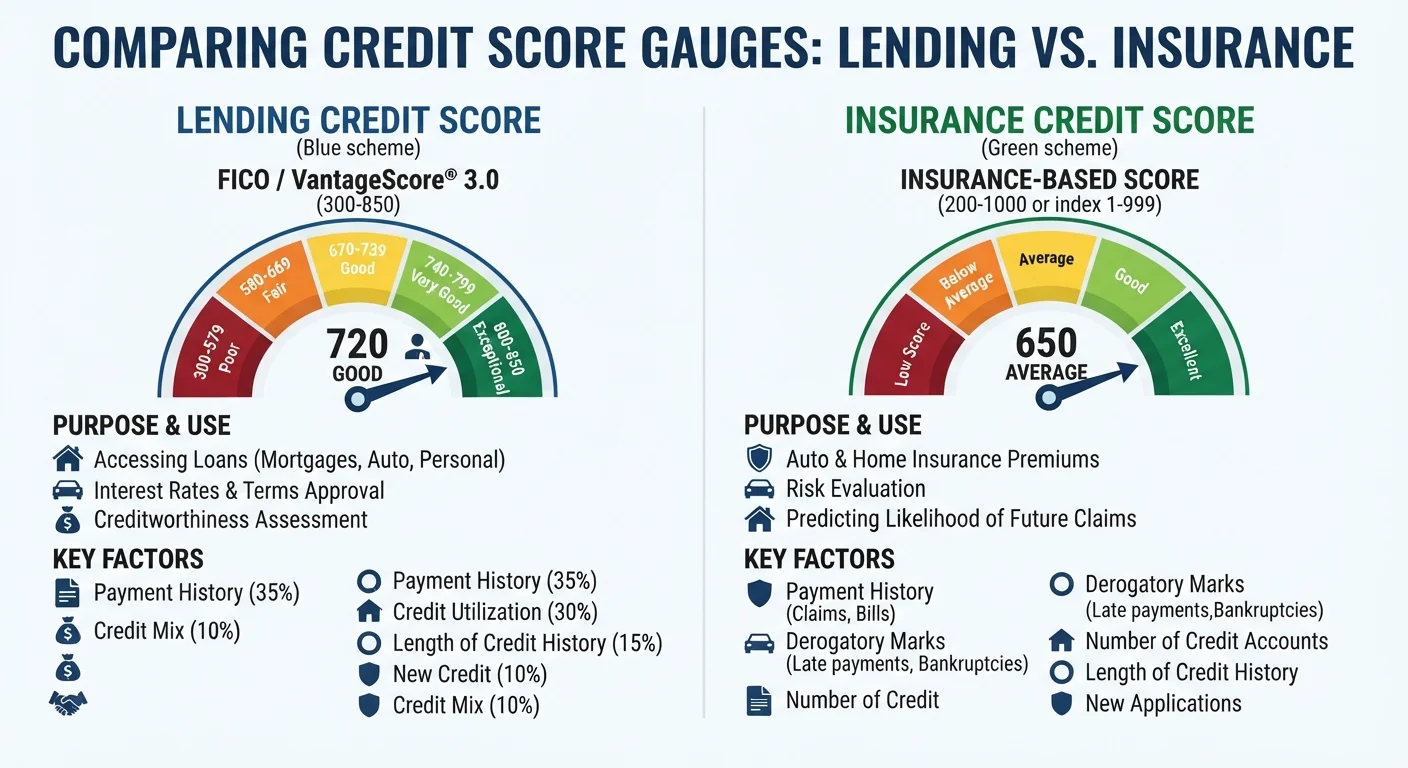
The factors that typically carry the most weight in a CBIS include:
- Payment history, including late or missed payments
- Total outstanding debt relative to available credit
- Length of credit history
- Number of recent applications for new credit
- Mix of account types
Insurers do not see your income, employment status, or demographic information through this channel. Federal law under the Fair Credit Reporting Act governs how these scores can be used, and if an insurer takes an adverse action based partly on credit, it must notify you.
46 states
States where credit scoring in auto insurance is permitted
As of the mid-2020s, the majority of U.S. states allow insurers to use credit-based insurance scores; four states ban or significantly restrict the practice.
3 major bureaus
Credit bureaus that supply data for CBIS models
Equifax, Experian, and TransUnion all provide the underlying credit file data that scoring companies use to calculate credit-based insurance scores.
Where the practice is restricted or banned
State law governs whether and how a CBIS can be used. California, Hawaii, Massachusetts, and Michigan do not allow insurers to use credit information in auto rate-setting. Drivers in those states are priced on other factors entirely.
Several other states allow the score but place limits on it: for example, requiring insurers to periodically re-check scores, prohibiting its use as the sole reason for a rate increase, or mandating exceptions for consumers facing documented hardship. Your state insurance department's website is the authoritative source for local rules.
What you can do with this information
Because a CBIS draws on your credit file, habits that build healthier credit over time can eventually affect what insurers see. Paying bills on time, keeping credit card balances well below their limits, and avoiding unnecessary new credit applications are the same practices that support a stronger lending score.
Checking your own credit report through AnnualCreditReport.com lets you spot errors before an insurer does. Disputing inaccurate items is a right under the Fair Credit Reporting Act.
Credit is one factor among many. Driving record, annual mileage, vehicle make, and geography all feed into your final premium as well. Some drivers prefer programs that price based on actual driving behavior instead. Usage-based and pay-per-mile programs work differently and may suit drivers with strong habits but thinner credit histories.
If you carry multiple policies, bundling can also affect your overall costs. Bundling home and auto insurance changes how coverage is structured, which is worth understanding before you combine policies.
This article is for general informational purposes only and is not personalized insurance, financial, or legal advice. Coverage terms, pricing factors, and state regulations vary. Consult a licensed insurance agent or your state insurance department for guidance specific to your situation.