

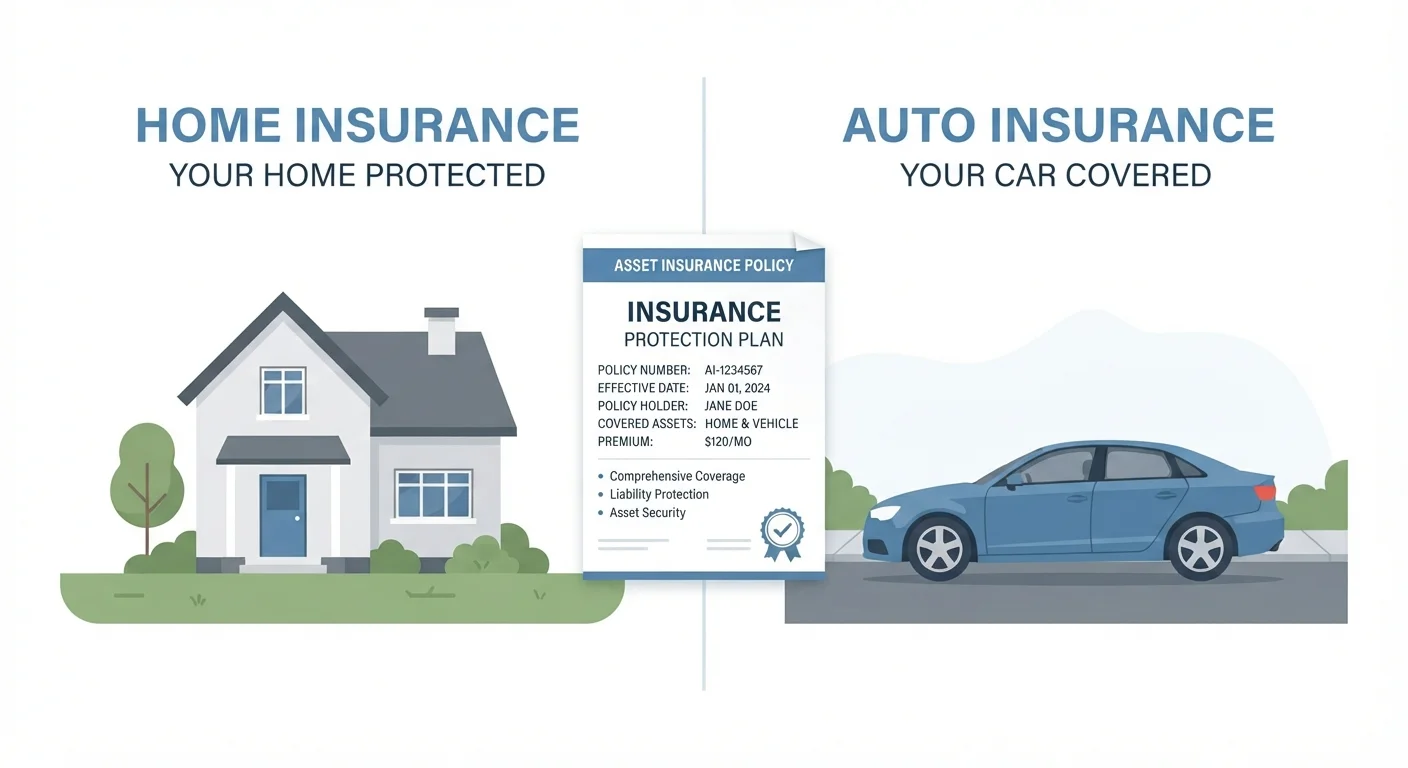
What bundling actually means for your coverage
Bundling means holding your homeowners (or renters) insurance and your auto insurance with the same company under a single account relationship. The insurer typically applies a multi-policy discount to one or both policies. Beyond the pricing element, bundling affects how you manage renewals, file claims, and handle any changes you want to make down the road.
The discount is the most advertised reason to bundle, but it is worth separating that from the other practical effects. Cost, convenience, and flexibility all shift when you consolidate coverage, and they do not all shift in the same direction.

The case for bundling
The clearest argument for bundling is the potential reduction in total premium cost. When an insurer rewards you for consolidating coverage, the savings can be meaningful, particularly for households with a relatively new home or multiple vehicles.
Multi-policy discount can lower total premiums
Most major insurers offer a percentage discount when you hold both a homeowners and an auto policy with them. The discount typically ranges from around 5% to 25%, though the exact figure depends on the insurer, your state, and the specifics of each policy.
One insurer, one billing relationship
Managing a single account, one renewal cycle, and one customer service contact reduces the administrative load compared to tracking two separate insurers with different payment schedules.
Simplified claims when both properties are involved
If an event damages both your car and your home at the same time, such as a severe hailstorm, having one insurer handle the claim can reduce coordination friction. Some insurers also waive one deductible in these overlapping situations, though this varies by policy.
Loyalty benefits may accumulate over time
Some insurers extend additional perks to long-term bundled customers, including deductible reductions for claim-free periods or enhanced coverage options. These vary significantly by insurer and are not guaranteed.
If you are also evaluating add-ons for your auto policy, see how optional auto coverage add-ons work before deciding whether bundling alone addresses your coverage needs.
Where bundling creates trade-offs
The convenience of a single insurer comes with reduced flexibility. Once both policies are tied to a discount, changing either one has consequences for the other. That dynamic limits your ability to respond to rate increases or coverage issues on a per-policy basis.
The bundle discount may not beat separate quotes
A 15% discount on an overpriced policy can still cost more than a competitive standalone rate from a different insurer. Running separate quotes for each policy is the only reliable way to verify whether the bundle is actually lower in cost.
Switching one policy disrupts the entire arrangement
If your auto insurer raises rates significantly and you want to move that policy elsewhere, doing so will likely eliminate the bundle discount on your homeowners coverage too, raising the total cost of both changes.
One insurer's weaknesses apply to both policies
If your insurer handles auto claims efficiently but has a slower process for homeowners claims, you are committed to that service quality for both. Splitting coverage lets you choose the insurer with the strongest track record for each product type.
Coverage gaps can be harder to spot
When both policies come from the same insurer, there is less natural friction prompting you to review each one carefully at renewal. Gaps in coverage, such as insufficient liability limits or missing endorsements, can persist unnoticed across multiple renewal cycles.
State availability and discount depth vary
Bundling discounts are not regulated uniformly. In some states, insurers are restricted in how they can structure multi-policy pricing, which can reduce or eliminate the financial advantage of bundling entirely.
This article is general information, not advice
Coverage terms, discounts, and exclusions differ by insurer and by state. Nothing here constitutes personalized insurance, financial, or legal advice. Before making changes to your coverage, read your actual policy documents and consult a licensed insurance agent who can evaluate your specific situation.
Rate increases unrelated to your own claims history are common and can affect bundled customers the same as anyone else. Understand what drives auto rate increases so you can evaluate whether your bundled rate still holds up at renewal.
How to evaluate whether bundling makes sense
The most practical step is getting separate quotes for each policy before committing to a bundle. Compare the bundled total against what two standalone policies would cost with different insurers. If the bundled price is lower and the coverage terms are comparable, the bundle has a clear argument in its favor.
Check each policy's coverage limits, deductibles, and exclusions independently. A discount does not offset a gap in liability coverage or a missing endorsement you actually need. A practical walkthrough for auto insurance shopping can help you know what to look for when reading quotes side by side.
If you already have both policies and are considering splitting them, work through a switching checklist to avoid coverage gaps during the transition. Also consider how service bundles in other categories behave: bundling internet and TV plans follows a similar pattern where the discount does not always produce the lowest total cost.
5%-25%
Typical multi-policy discount range
Insurers commonly advertise bundle discounts in this range, though the actual amount depends on your state, insurer, and specific policy details.
2 in 3
Homeowners who also bundle auto coverage
The Insurance Information Institute has reported that a substantial majority of homeowners insurance customers also hold their auto policy with the same carrier.
This article is for general informational purposes only and does not constitute personalized insurance, financial, or legal advice. Coverage terms, eligibility, and discounts vary by insurer and state. Consult a licensed insurance professional before making decisions about your coverage.