

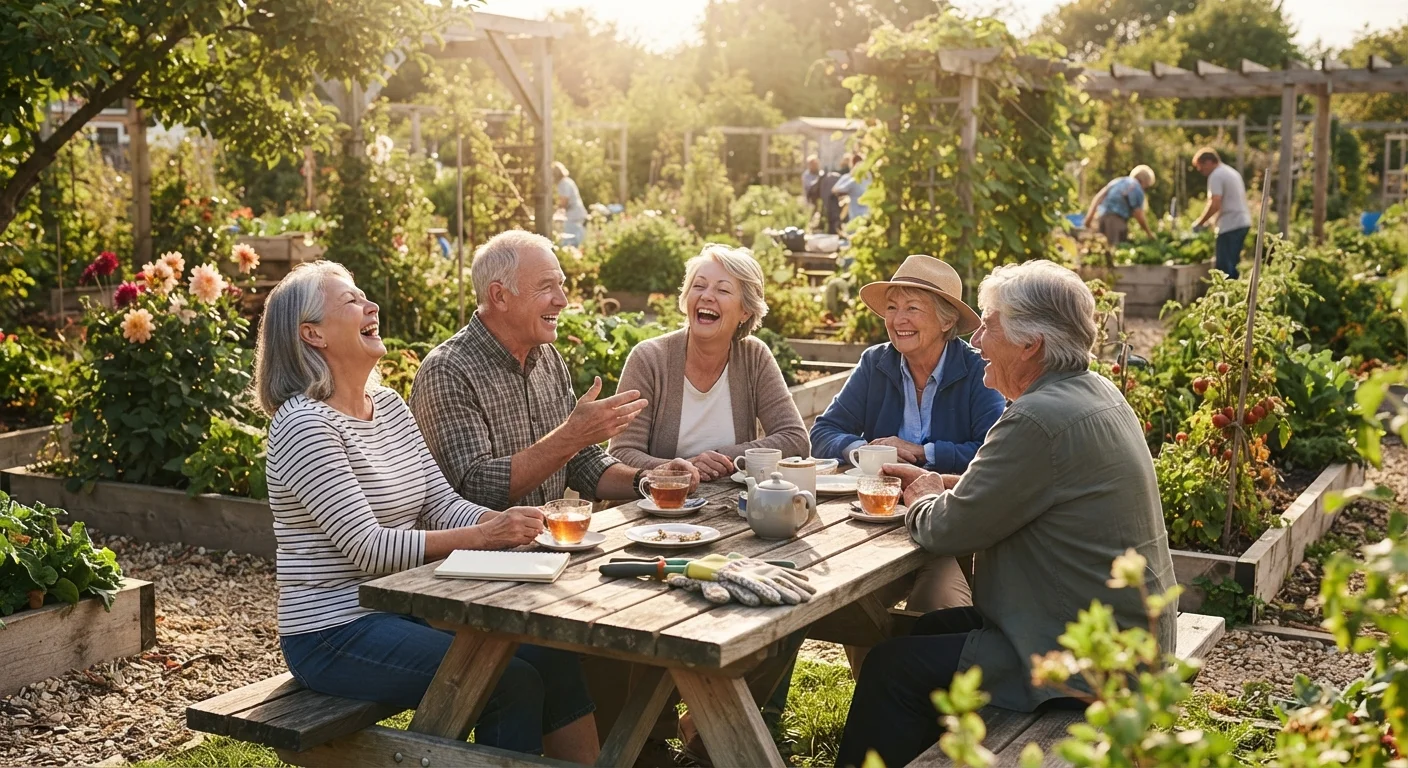
Why social connection matters for older adults
Social isolation is not simply loneliness. Researchers and public health agencies distinguish between the two: isolation refers to an objectively limited network of social contacts, while loneliness is the subjective feeling of being alone. Both can affect health, but they do not always occur together. An older adult living alone may feel deeply connected; someone surrounded by people may feel cut off.
The U.S. Surgeon General's 2023 advisory on loneliness and isolation described social disconnection as a significant public health concern across age groups, with older adults facing particular risk factors: retirement, loss of a spouse or close friends, reduced mobility, and chronic health conditions that limit activity. The advisory cited associations between social isolation and higher rates of heart disease, stroke, dementia, and premature death, though it was careful to note that association does not establish direct cause.
For families thinking about a parent's or grandparent's living situation, this context matters. Whether someone is aging in place or considering a move to a care setting, the social dimension of that choice deserves the same attention as the medical or financial one.
~50%
Increased likelihood of dementia linked to isolation
According to a 2020 report from the National Academies of Sciences, Engineering, and Medicine, social isolation is associated with approximately a 50 percent higher likelihood of developing dementia.
1 in 3
Adults 45 and older who report feeling lonely
The AARP Public Policy Institute has reported that roughly one in three adults aged 45 and older describe themselves as lonely in survey data collected over multiple years.
What the research actually shows
Much of the published research on social isolation and older adults comes from longitudinal studies that follow participants over many years. The National Institute on Aging, part of the U.S. National Institutes of Health, has funded research consistently finding that older adults with strong social ties perform better on cognitive assessments over time than those with weaker networks. These findings appear across income levels and living arrangements.
A 2020 report from the National Academies of Sciences, Engineering, and Medicine reviewed the available evidence and concluded that social isolation is associated with a roughly 50 percent increased likelihood of dementia. The report also noted that causal pathways are not fully established and that more research is needed, particularly on which interventions actually reduce risk in practice.
This distinction between association and proven cause matters for how families interpret the research. Social connection is worth pursuing on its own terms; the health associations are an additional reason to take it seriously, not a guarantee of any particular outcome.
Programs and services that address isolation
A range of programs exist specifically to reduce social isolation among older adults. Many are publicly funded or low cost.
- The Older Americans Act, administered through the Administration for Community Living, funds local Area Agencies on Aging (AAAs) across the country. AAAs coordinate services including congregate meal programs, senior centers, and friendly visitor programs where volunteers make regular contact with isolated older adults. To find your local AAA, visit eldercare.acl.gov.
- PACE programs (Programs of All-Inclusive Care for the Elderly) combine medical care with adult day services, which include structured social activities. PACE is available in many but not all states and has income and health eligibility requirements.
- Senior centers, often operated by local government or nonprofits, provide regular gathering places for activities, classes, and meals. Attendance is typically free or low cost.
- Telephone reassurance programs, offered by many counties and nonprofits, provide regular check-in calls for homebound seniors.
Families researching in-home care vs. assisted living may find that the social programming available in each setting is one of the more meaningful differences between the two options. Some older adults who are medically capable of remaining at home find that a structured community environment better addresses their social needs.
Federal and state assistance programs can sometimes offset the cost of transportation to senior centers or other social activities, which is worth exploring if cost or mobility is a barrier.
Practical approaches families can support
Build consistent, predictable contact into the weekly routine
Sporadic contact is harder to rely on than scheduled check-ins. Predictable connection gives older adults something to anticipate and reduces the anxiety of uncertainty about when they will next hear from family or friends.
Connect the older adult with at least one structured community activity
One-on-one family contact matters, but peer interaction with people of similar ages and interests provides a different kind of social connection. Community activities also continue when family members are traveling or unavailable.
Address transportation barriers directly
Inability to drive is one of the most common reasons older adults stop attending social activities. Solving transportation often unlocks participation in programs they would otherwise want to attend.
Use technology as a supplement, not a replacement, for in-person contact
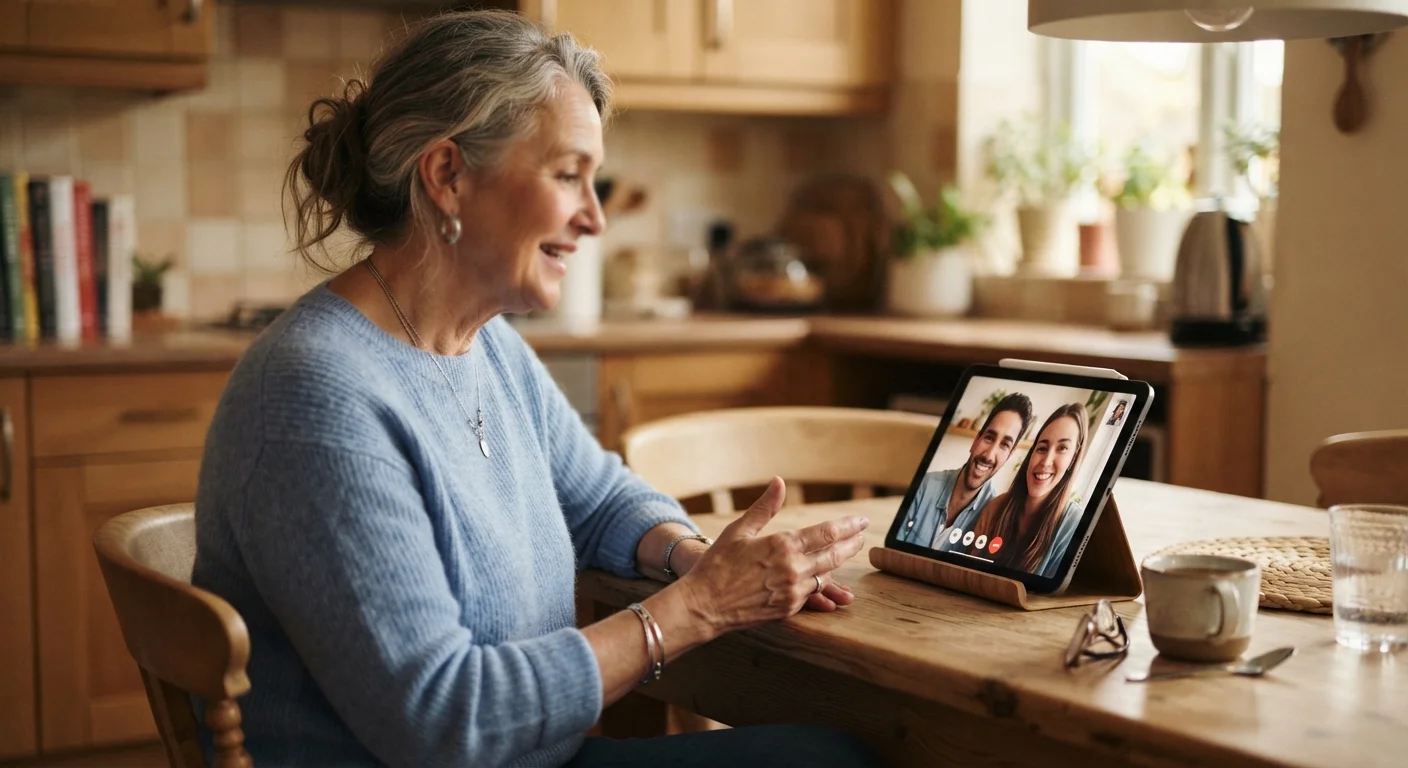
Video calls and messaging apps make contact easier across distances, but they work best when paired with some in-person time rather than substituting for it entirely.
Watch for signs that isolation has worsened and raise them with a doctor
Changes in mood, withdrawal from previously enjoyed activities, and decreased communication can signal depression or cognitive change, not just social preference. A primary care provider is the right first contact when these changes appear.
This article is for general informational purposes only and does not constitute medical, legal, or financial advice. Consult a qualified healthcare professional about any concerns related to an older adult's health or well-being.