

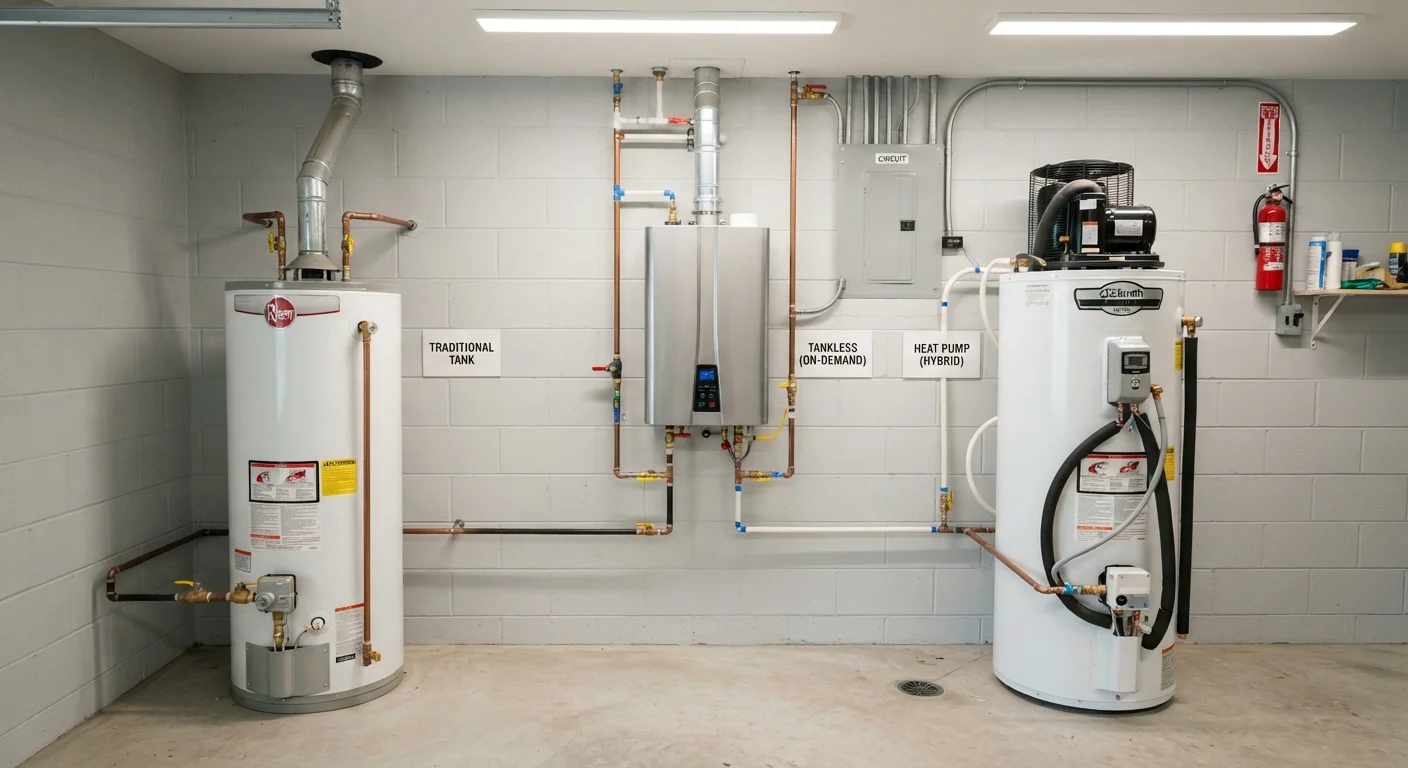
How the three types work
A storage tank water heater holds a reservoir of water, typically 30 to 80 gallons, and keeps it heated continuously. When you open a hot tap, preheated water flows out and cold water refills the tank. Gas and electric models both follow this pattern.
A tankless water heater (also called an on-demand heater) has no storage. It heats water only when a tap is opened, passing water across a high-powered burner or electric element. Because it does not maintain a standing supply, it avoids the standby energy loss that affects tank models.
A heat pump water heater works differently from both. It moves heat from surrounding air into the water rather than generating heat directly, much the way a refrigerator moves heat out of its interior. This process uses significantly less electricity than a resistance-based electric tank. Most heat pump models include a backup resistance element for periods of high demand.
Comparing costs and efficiency
Upfront price differences are substantial. A standard electric or gas tank unit generally runs lower on installed cost than a tankless or heat pump model. Tankless gas units carry higher installation costs because they often require upgraded gas lines and venting. Heat pump water heaters have the highest purchase price among electric options, though rebates from the federal Inflation Reduction Act and some utility programs can offset a meaningful share of that cost. Verify current rebate availability with your utility and a licensed installer before making any purchasing decision.
On operating costs, heat pump models use roughly two to three times less electricity than a standard electric tank, according to the U.S. Department of Energy. Gas tankless units are generally more efficient than gas tank models. These figures vary with local fuel prices, which you can explore further in our article on electricity rate structures.
| Tank | Tankless | Heat pump | |
|---|---|---|---|
| Typical upfront installed cost | Lower | Moderate to high | Higher (rebates may apply) |
| Energy efficiency | Moderate | High (gas) / moderate (electric) | Highest (electric) |
| Lifespan | 8 to 12 years | 15 to 20 years | 15 to 20 years |
| Space needed | Floor footprint | Wall-mounted, minimal | Large air volume required |
| Hot water supply | Limited by tank size | Continuous (flow rate limits) | Continuous (with backup element) |
| Cold climate performance | Unaffected | Unaffected | Reduced in unheated spaces |
| Fuel options | Gas or electric | Gas or electric | Electric only (most models) |
Space, climate, and household fit
Tank units fit in most utility closets and basements with no special conditions. Tankless units mount on a wall and free up floor space, though gas models need proper venting to the exterior.
Heat pump water heaters need more room: most manufacturers specify at least 700 to 1,000 cubic feet of surrounding air space. They also pull heat from the air, so they perform poorly in very cold spaces like unheated garages in northern climates. In conditioned basements or warm utility rooms, performance is better. Because they cool and dehumidify the surrounding air as a byproduct, placement inside living space can actually reduce air conditioning load in summer.
Household size affects the calculation too. A family of four or five using hot water simultaneously may exceed the flow rate of a single standard tankless unit. Sizing a tankless heater correctly, or installing two units, adds to cost. A large tank or a heat pump model with a 50- to 80-gallon capacity may be simpler for high-demand households.
Water heater choice also connects to broader home energy use. Our room-by-room utility cost breakdown shows how water heating typically ranks among the largest single line items on a home energy bill.
Lifespan and maintenance
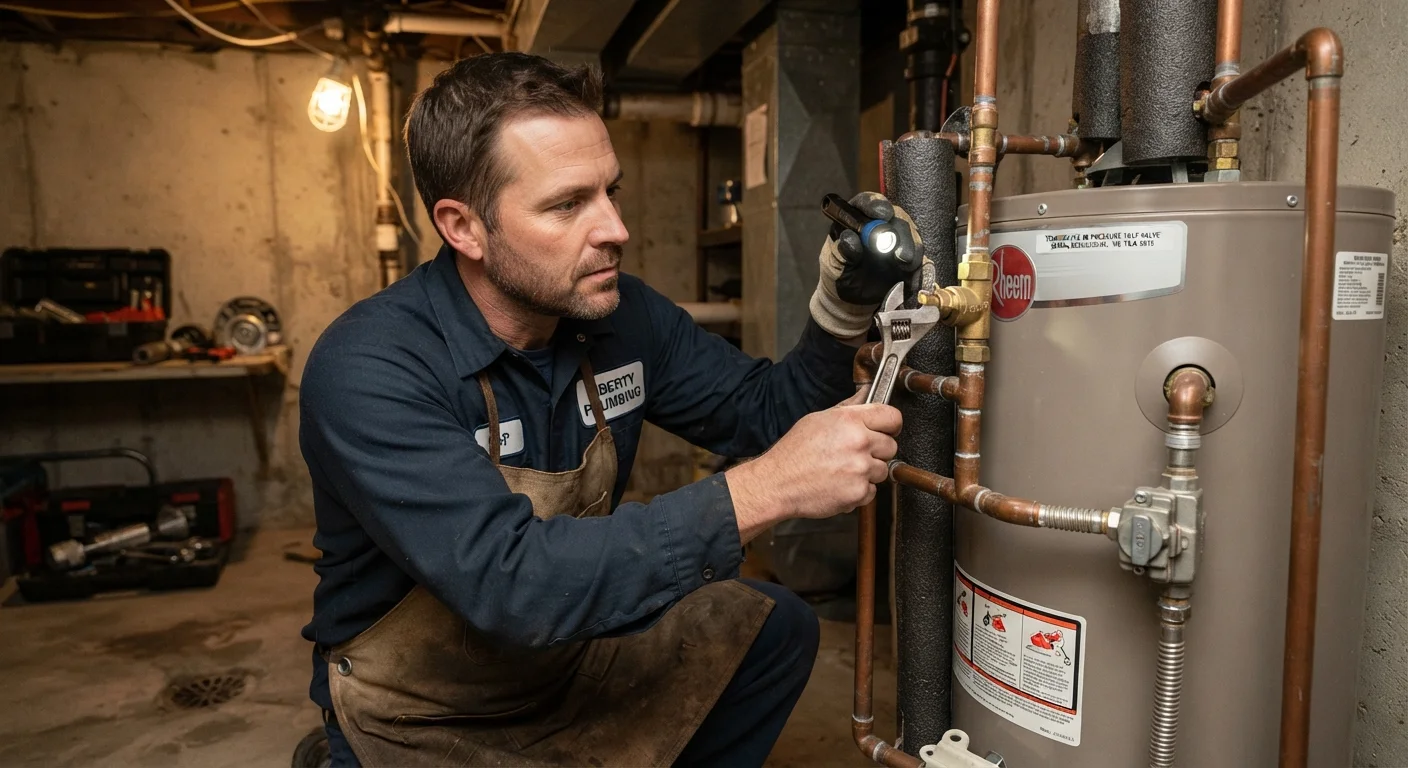
Tank water heaters typically last 8 to 12 years. Flushing sediment annually and replacing the anode rod (a sacrificial metal rod that slows corrosion inside the tank) every few years can extend that range. Tankless units generally last 15 to 20 years with periodic descaling, particularly in areas with hard water. Heat pump water heaters have a lifespan comparable to tankless models, though the heat pump component adds mechanical complexity.
All three types benefit from professional annual inspection. For units connected to gas lines, a licensed plumber or gas technician should handle any service work. Electrical connections, pressure relief valves, and venting systems are not DIY tasks; improper work can create safety hazards and may void warranties or violate local building codes. Check permit requirements with your local building department before any replacement.
If you are evaluating what a home warranty might cover for appliance failures, see our article on common home warranty myths for a realistic picture of what those plans typically include and exclude.