

Why exclusions matter more than coverage headlines
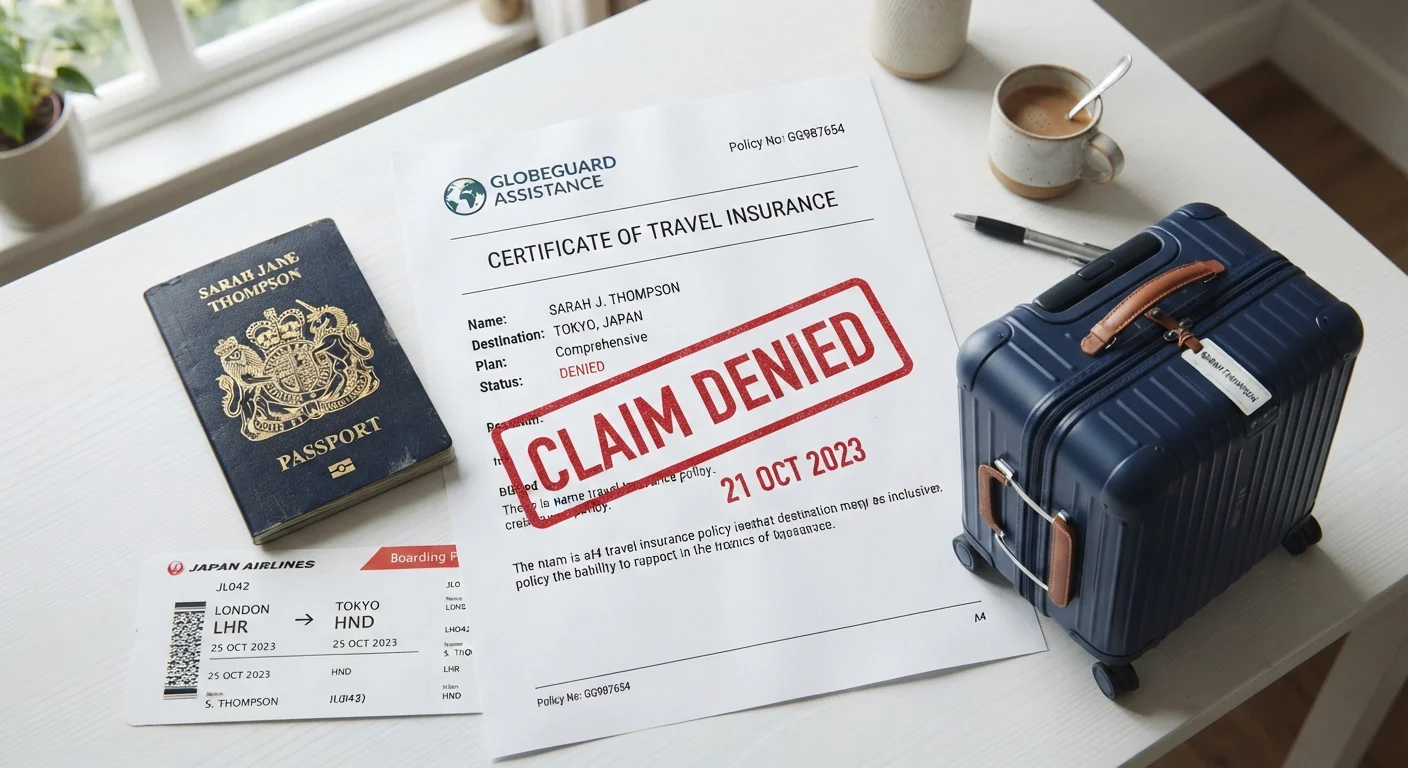
Travel insurance marketing focuses on what a policy covers. The exclusions section, buried further in the document, is where claims actually get denied. For budget-conscious travelers, a denied claim on a $3,000 trip is a significant financial hit, so understanding exclusions before purchase is more practical than understanding benefits.
Policies vary widely. The same category of coverage, such as medical evacuation or trip cancellation, can carry very different exclusions depending on the insurer and plan tier. The sections below cover the exclusion categories that come up most frequently in claim disputes.
Pre-existing medical conditions
This is the single most common source of denied claims. Most standard policies define a pre-existing condition as any illness, injury, or symptom for which you received diagnosis, treatment, or medication within a lookback period, typically 60 to 180 days before purchase. If a condition falls within that window, any claim connected to it can be denied.
Many policies offer a pre-existing condition waiver, but you generally must buy the policy within a short window after your first trip deposit, often 14 to 21 days. Miss that window and the waiver option closes.

Seniors traveling with managed conditions such as diabetes, heart disease, or high blood pressure should pay close attention to this exclusion. For general guidance on health coverage gaps, the Medigap coverage gap explainer covers how supplemental insurance handles similar pre-existing condition questions in a Medicare context.
Cancellation reasons that do not qualify
Trip cancellation coverage sounds broad but it is tied to a defined list of covered reasons. Work-related cancellations, such as a scheduling conflict or a job loss in some policies, are often excluded or subject to strict documentation requirements. Fear of travel, whether because of weather forecasts, news coverage, or general anxiety, is not a covered reason under standard policies.
Cancellations due to known events are also excluded. If a hurricane is already named and you buy a policy afterward, that storm is a known event and any claim related to it will be denied. The same logic applies to destinations under a government travel advisory at the time of purchase.
For a full breakdown of what reasons insurers do and do not accept, see what qualifies as an accepted cancellation reason.
Read the definitions section first
Before scanning the benefits summary, find the definitions section of any policy you are considering. How the insurer defines terms like 'pre-existing condition,' 'trip interruption,' and 'covered reason' determines what actually pays out. If a definition is narrower than you assumed, the listed benefit may apply in far fewer situations than the summary implies.
High-risk and adventure activities
Standard travel insurance defines covered activities broadly but carves out anything the insurer classifies as high-risk. Common exclusions include skydiving, bungee jumping, rock climbing without guides, scuba diving beyond recreational depths, motorcycle riding in some regions, and certain organized competitions. The exact list differs by policy.
If your trip includes any of these activities, a standard policy may leave you without medical or evacuation coverage for any incident that occurs during them. Some insurers sell adventure sports riders that add coverage for specific activities; verify that the activity you plan is actually named in the rider, not just implied by a general category.
Epidemics, pandemics, and government advisories
Before 2020, most travelers did not read the epidemic and pandemic exclusion clauses. These exclusions are now more visible, but they remain inconsistent across policies. Some policies exclude any losses connected to a declared public health emergency. Others cover trip cancellation if you personally contract a covered illness but exclude destination-wide disruptions.
Government advisory exclusions work similarly. Traveling to a destination under a U.S. Department of State Level 3 or Level 4 advisory after that advisory is in place typically voids related claims. Verify current advisories at travel.state.gov before purchase and before departure, since advisories can change.
Baggage and valuables limits
Baggage coverage has per-item and aggregate limits that are often much lower than what travelers actually carry. A policy might allow $2,500 total for baggage loss but cap any single item at $500. Laptops, cameras, and jewelry can easily exceed those per-item caps. Cash is frequently excluded entirely or limited to $100 to $200.
Homeowner's or renter's insurance sometimes covers personal property during travel; check that policy before assuming travel insurance fills the gap. Some credit cards also include baggage delay or loss benefits when you use them to pay for travel, though the limits are similarly narrow.
This article is for general informational purposes only and is not insurance, legal, or financial advice. Policy terms, exclusions, and coverage vary by insurer and plan. Read your policy documents carefully and consult a licensed insurance professional for guidance specific to your situation. Verify travel advisories and entry requirements with official government sources before traveling.