

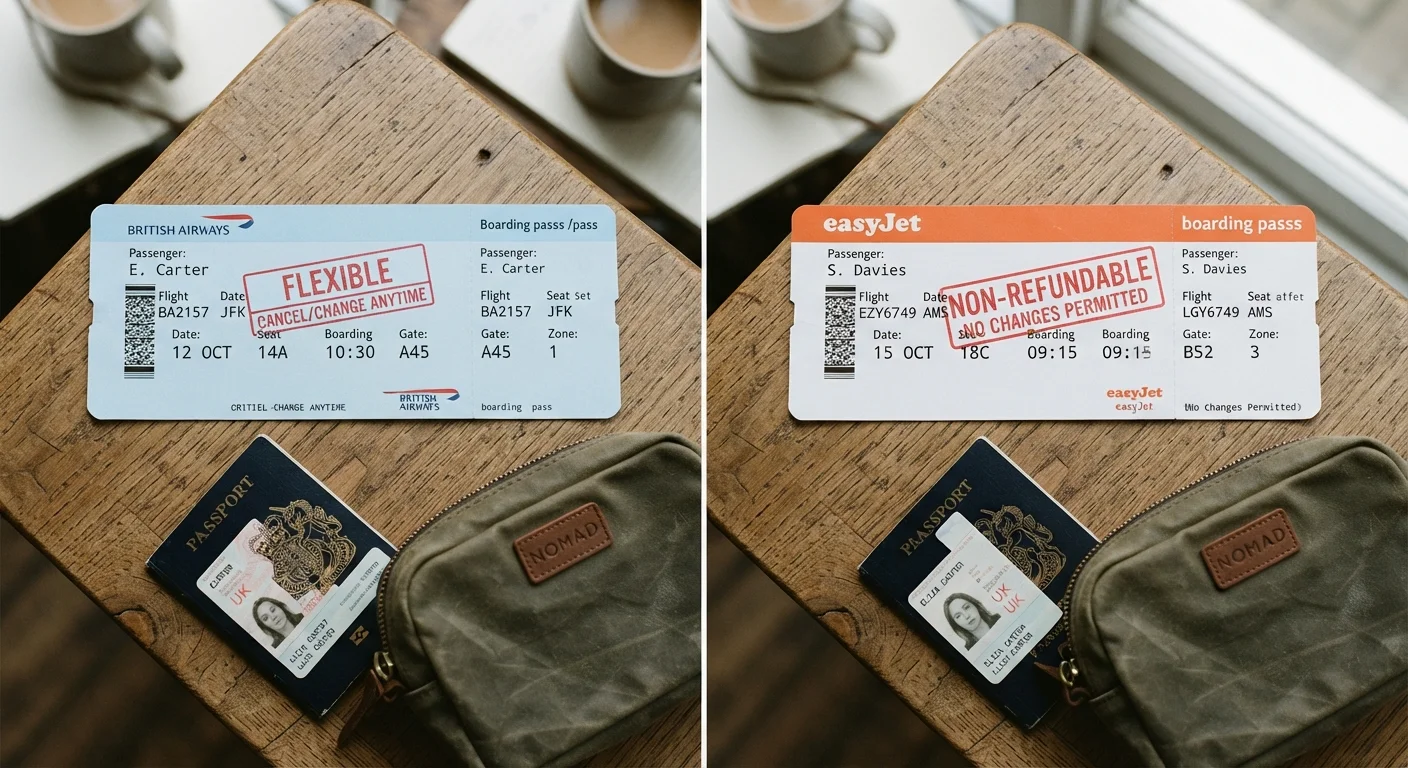
What the rate types actually mean
A flexible booking lets you cancel or modify a reservation and get a refund, or at least a credit, within a defined window. That window matters: some hotels allow cancellation up to 24 hours before check-in, while airlines may charge a change fee even on supposedly flexible fares. Read the specific terms, not just the label.
A non-refundable booking means the provider keeps your payment if you cancel, regardless of the reason. Some airlines will issue a travel credit instead of a full refund, but that credit often comes with expiration dates and route restrictions. Hotels may offer partial refunds in rare cases, but the default is total loss.
Neither type is inherently wrong. They are priced differently because they carry different levels of risk for the traveler and the provider.
The real cost difference
Non-refundable rates can run meaningfully lower than flexible ones, sometimes 10 to 30 percent less depending on the route, hotel, or booking window. For a week-long trip with multiple components, that gap can amount to hundreds of dollars.
The question is whether the savings justify the exposure. If there is a 90 percent chance your plans are firm, a non-refundable booking often makes financial sense. If there is real uncertainty, the lower rate can cost far more than the premium you would have paid for flexibility.

One practical tool: calculate what you would lose if you had to cancel. If the non-refundable savings are $80 but the total at risk is $1,200, the math changes depending on how confident you are in your plans.
Where flexible bookings fall short
Flexible does not mean unconditional. Airlines that advertise free changes often mean same-day changes or rebooking on another flight, not a cash refund. Hotel free-cancellation windows can be narrow, and missing the cutoff by even a few hours can trigger the full charge.
Third-party booking platforms add another layer of complexity. A hotel might have a generous cancellation policy directly, but the platform's terms may differ. Booking direct versus using a travel platform covers how these differences play out in practice.
Flexible bookings also do not protect against every scenario. If travel disruptions originate with the airline or hotel (weather cancellations, overbooked flights), your rights under a flexible fare are generally the same as under a non-refundable one. The fare type governs what happens when you cancel, not when the provider does.
How travel insurance fits in
Travel insurance can cover non-refundable costs when cancellation happens for a qualifying reason: a medical emergency, a death in the family, jury duty, and similar circumstances. Standard policies do not cover a change of heart, a work schedule conflict, or a destination that simply becomes less appealing.
"Cancel for any reason" (CFAR) coverage does allow broader cancellation, but it typically reimburses only 50 to 75 percent of the trip cost and must be purchased within a short window after the initial booking deposit. It also costs more than standard trip cancellation coverage.
What qualifies as an accepted cancellation reason explains which circumstances standard policies typically cover and where gaps tend to appear. Insurance adds a layer of protection but does not fully replicate the flexibility of a refundable rate.
CFAR coverage has strict purchase windows
Most travel insurers require you to add cancel-for-any-reason coverage within 10 to 21 days of your initial trip deposit. Waiting until closer to departure typically means CFAR is no longer available. Check the insurer's specific terms before assuming you can add it later.
Making the call before you book
A few questions narrow the decision quickly. How firm are your travel dates? Do you have health conditions or family responsibilities that could shift? How much of the total trip cost is at stake in a single non-refundable transaction?
Spreading risk also helps. Booking a refundable hotel while locking in a non-refundable flight (where the savings are larger) is a reasonable middle ground. Smart habits for getting more value from every trip outlines planning approaches that help balance cost against risk across a full itinerary.
No booking structure eliminates all risk. What changes is where the financial exposure sits and how much you pay to reduce it.