

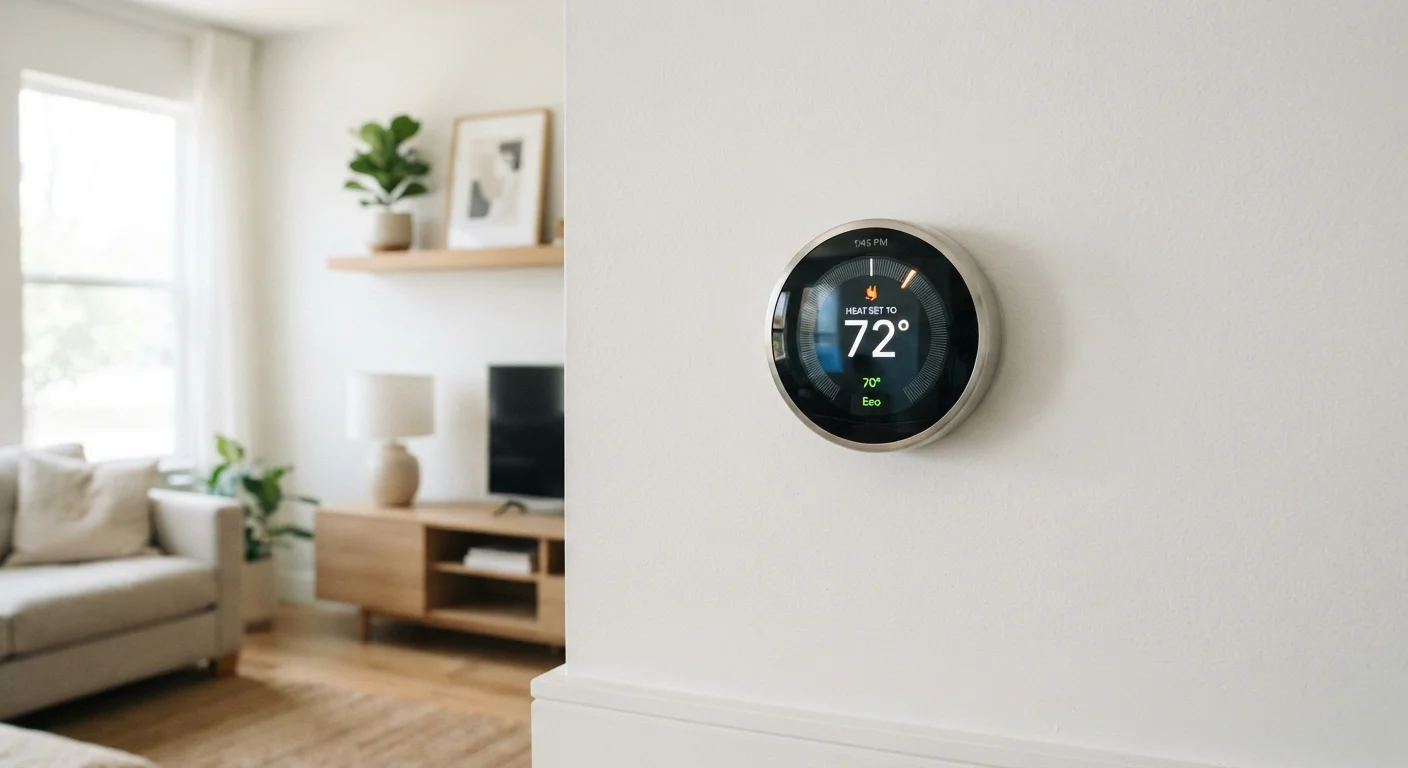
How a smart thermostat works
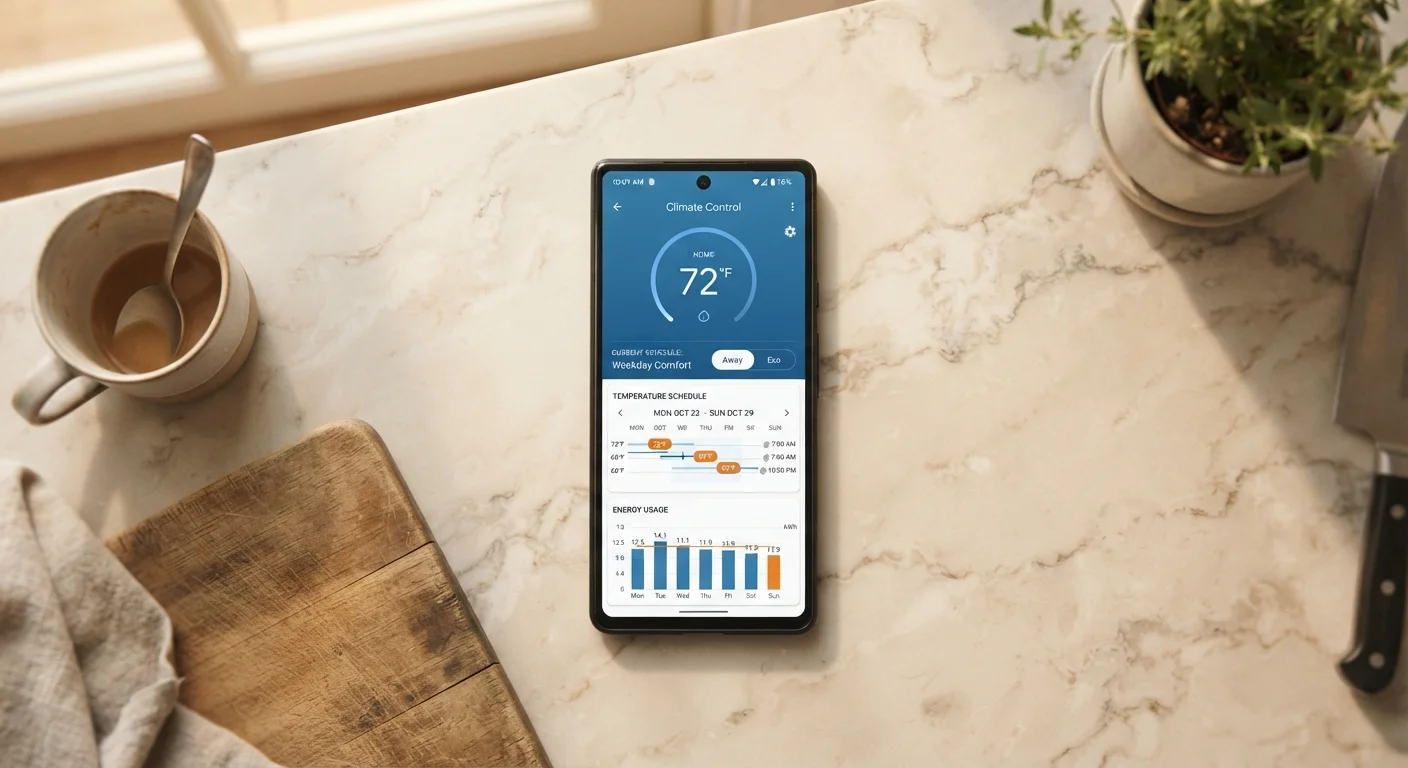
A smart thermostat replaces the standard thermostat on your wall. It connects to your home Wi-Fi and pairs with an app on your phone or tablet, so you can change the temperature from anywhere. Most models also let you set weekly schedules, turning the heat down while you are at work and warming the house before you return.
Some devices go further by using motion sensors or GPS location data from your phone to detect when the house is empty. Over several weeks, certain models build a schedule automatically based on the patterns they observe. Others stay fully manual and simply give you remote access without any learning features.
The hardware connects to the same low-voltage wiring your existing thermostat uses. Most modern forced-air systems are compatible, but older homes, electric baseboard heaters, and some boiler setups may not be. A C-wire (common wire) supplies continuous power to the thermostat; many newer systems include one, but houses built before the 1990s often do not. Some thermostat models include an adapter that works around a missing C-wire, though this does not apply to every system.
What a smart thermostat does not do
A smart thermostat controls your existing heating and cooling equipment. It does not improve the efficiency of that equipment, seal air leaks in your walls, or upgrade your insulation. A drafty house with a smart thermostat is still a drafty house.
The device also cannot fix an oversized or undersized HVAC system. If your furnace short-cycles (turns on and off too quickly) or your central air struggles on hot days, those are mechanical problems a thermostat cannot address. Resolving them typically requires a technician to inspect the equipment.
Start with your wiring, not the product
Before researching which smart thermostat to purchase, photograph the wiring behind your current thermostat and run it through the compatibility checker on the manufacturer's website. Discovering a wiring mismatch after the fact adds cost and complexity to what is otherwise a straightforward swap.
Energy savings also depend heavily on your current behavior. A household that already sets temperatures conservatively and follows a consistent schedule may see minimal change after installing a smart model. The largest potential savings tend to go to homes where the heat or air conditioning runs at full comfort settings all day regardless of whether anyone is home.
Who benefits most
Smart thermostats suit homeowners and renters who have predictable schedules, own or live in homes with standard forced-air HVAC systems, and have a reliable Wi-Fi connection. They are particularly useful for people who travel frequently and want to reduce heating or cooling costs while away without remembering to manually adjust settings.
They are less useful in households where someone is home most of the day, where the schedule changes constantly, or where the home lacks the compatible wiring. Older adults who find app-based interfaces difficult to navigate may prefer a simple programmable thermostat instead, which offers scheduled temperature changes without a smartphone requirement.
For context on other home systems that benefit from timely upgrades, our guide to water heater types covers how equipment choice affects both comfort and long-term costs.
What to check before making a decision
Before committing to a smart thermostat, confirm that your HVAC system is compatible. Most thermostat manufacturers publish online tools where you enter your current wiring configuration and receive a yes or no answer. Take a photo of your existing thermostat wiring before you remove anything.
If you rent, review your lease and ask your landlord in writing. Some landlords welcome the upgrade because it can reduce energy consumption in units where they pay utilities. Others have restrictions on modifications to built-in systems.
Consider also whether your home has other gaps, such as poor insulation or aging ductwork, that would return more value per dollar than a thermostat upgrade. A smart thermostat is a straightforward technology change, but it works within the limits of the system around it. If your home has been recently inspected and the mechanical systems are in reasonable shape, a smart thermostat is a relatively low-cost way to add scheduling flexibility and remote control. Understanding what home warranties actually cover is worth doing before assuming any device or appliance purchase protects you from repair costs.