


Why contract language trips people up
Home service contracts, whether for a home warranty, pest control, lawn care, or internet service, tend to share a common set of legal and billing terms. These words appear in the fine print, but they carry real financial weight. Missing them can mean unexpected fees, gaps in coverage, or a harder exit than you planned. This reference covers the terms that come up most often, so you can read any home service agreement with more confidence.
If you are setting up services for a new home, the service setup checklist is a useful companion to this glossary.
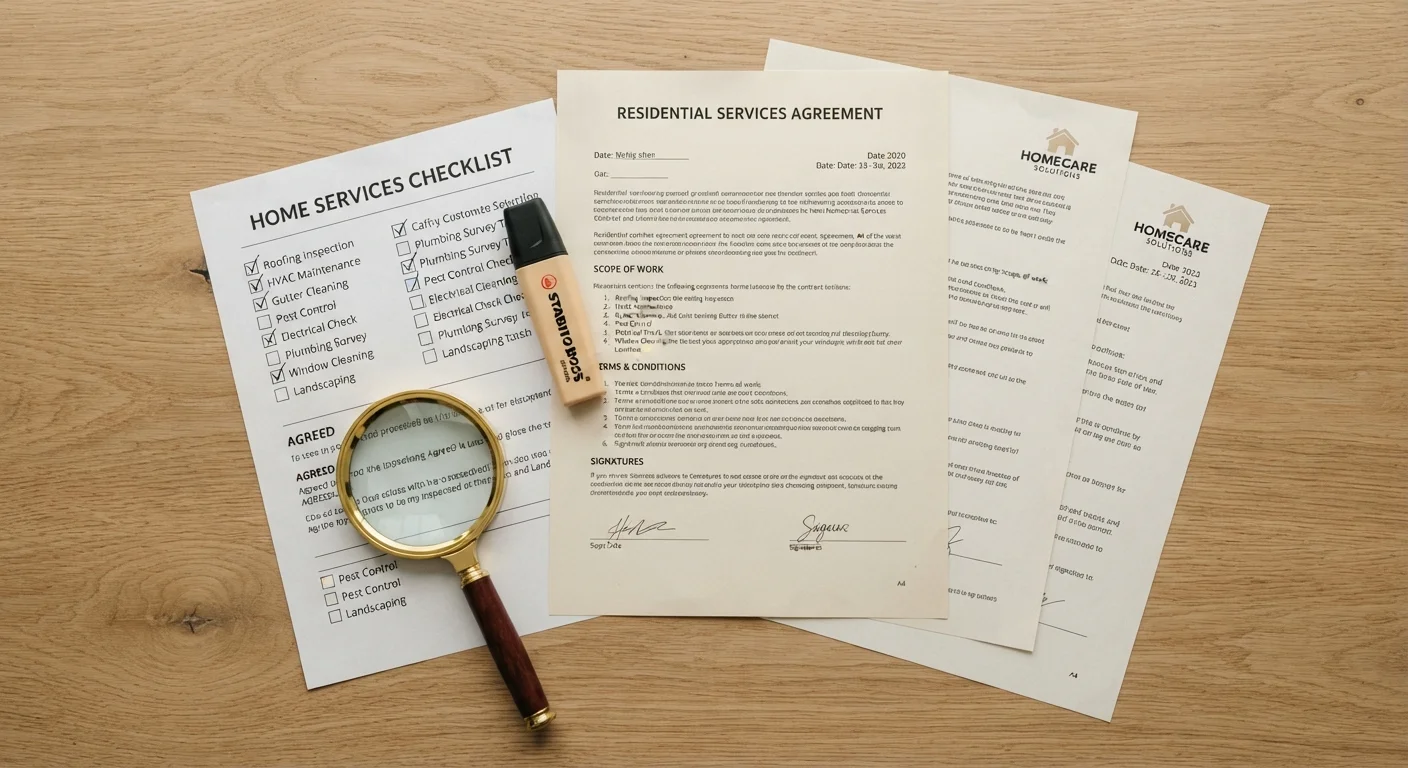
Core contract terms defined
The terms below appear across many types of home service agreements. Understanding each one before you sign gives you a clearer sense of what the contract actually commits you to.
Auto-renewal clause
A provision that automatically extends your contract for another term (often one year) unless you cancel within a stated window before the current term ends. Missing the cancellation deadline means you are committed to another full period.
Service call fee
A flat charge you pay each time a technician visits your home, separate from the cost of any repair or part. Home warranty plans commonly charge this fee per visit, regardless of whether the problem is fixed.
Early termination fee (ETF)
A penalty charged when you cancel a contract before its end date. ETFs are common in internet, security, and home warranty agreements, and the amount can equal the remaining monthly payments or a fixed sum.
Coverage exclusion
A specific condition, item, or cause of failure that the contract will not cover. Exclusions are listed in a dedicated section and should be read carefully before assuming coverage exists.
Deductible
The amount you pay out of pocket before the service provider or warranty plan covers the remaining cost of a repair or replacement. Some contracts call this a 'trade call fee' instead.
Pre-existing condition
A defect or failure that existed before your coverage started. Most home warranty plans explicitly exclude pre-existing conditions, which is why an inspection at enrollment matters.
Arbitration clause
A provision requiring you to resolve disputes with the provider through a private arbitration process rather than through the court system. Arbitration decisions are often binding and limit your ability to appeal.
Waiting period
A set number of days after enrollment during which you cannot file a claim. Home warranty plans typically impose a 30-day waiting period to prevent enrollment immediately after a known problem develops.
Two terms that catch homeowners off guard most often are auto-renewal and early termination fee. Auto-renewal locks you into another contract period if you do not cancel within a specific window, and early termination fees can wipe out any savings you gained by signing a longer agreement. Review the friction points involved in switching providers before canceling any active contract.
Terms specific to home warranty plans
Home warranty contracts carry their own vocabulary beyond the general terms above. A covered peril is a specific breakdown or failure that the plan agrees to repair or replace. Most plans only cover mechanical failure from normal wear; they exclude pre-existing conditions (problems that existed before coverage began), cosmetic damage, and failures caused by improper installation.
A cash-out option means the provider pays you a set dollar amount instead of arranging a repair. The amount offered is often less than actual repair cost, so weigh this carefully. A recall provision requires the provider to return and fix a repair that fails shortly after it was completed, usually within 30 to 90 days. Check whether your contract includes one, and how long it lasts.
For a deeper look at what home warranty contracts actually cover, see the common myths about home warranties that trip up first-time buyers.
| Typical home warranty waiting period | 30 days |
| Common service call fee range | $75 to $125 per visit |
| ETF structure (common formats) | Fixed fee or remaining balance |
| Auto-renewal cancellation window | 30 to 60 days before term end |
This article is for general informational purposes only. Contract terms, costs, and legal obligations vary by provider, state, and agreement. Read the full text of any contract before signing, and consult a licensed professional if you have questions about a specific agreement.