

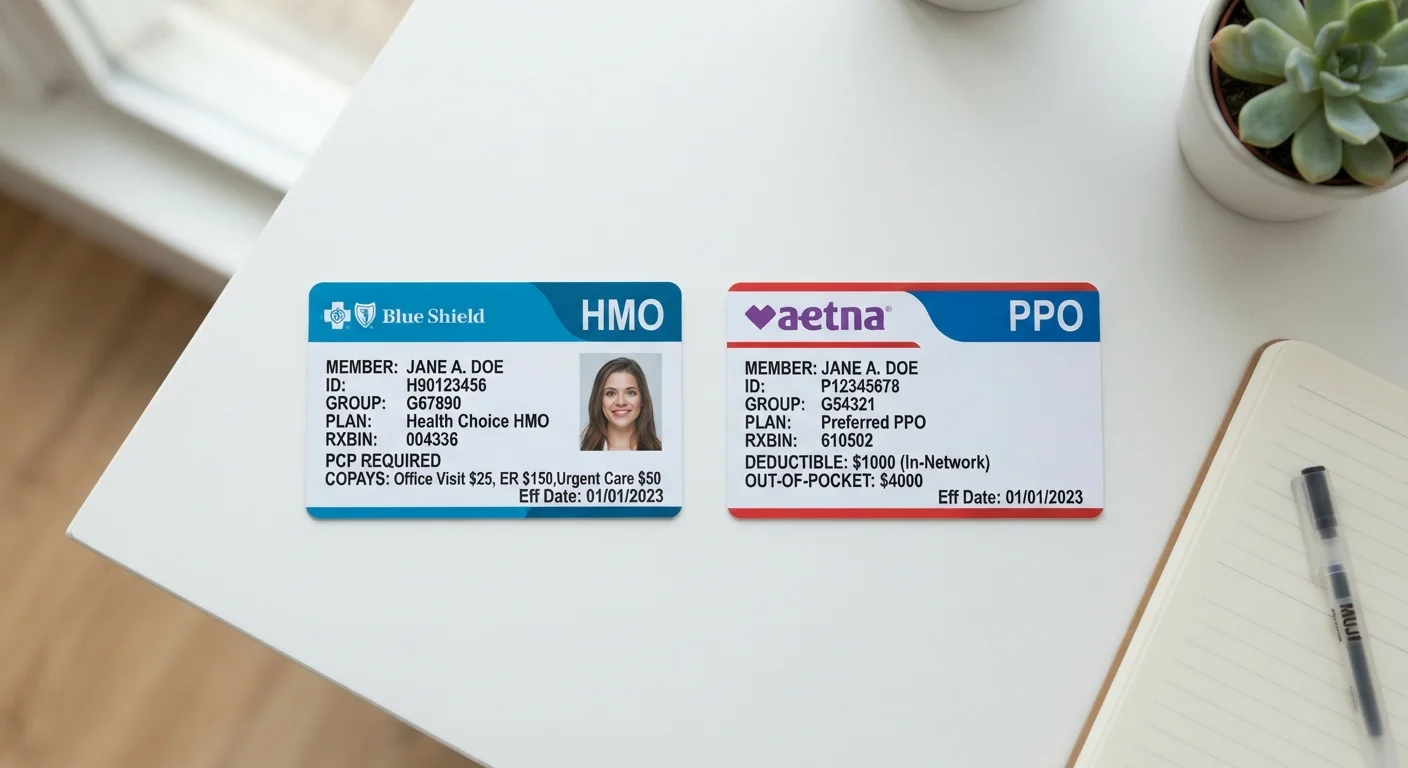
How each plan is structured
An HMO works through a network of doctors, hospitals, and clinics that have agreed to provide care at set rates. When you enroll, you choose a primary care physician (PCP). That doctor handles routine care and, when necessary, writes referrals to specialists within the same network. Care outside the network is generally not covered except in a genuine emergency.
A PPO does not assign you a primary care doctor, and you do not need a referral to see a specialist. You can use any provider, though the plan splits costs differently depending on whether that provider is in-network (preferred) or out-of-network. In-network visits cost less; out-of-network visits are still partially covered but come with higher cost-sharing.

Both plan types use the same core cost terms: premium (your monthly payment), deductible (what you pay before the plan starts sharing costs), copay (a fixed amount per visit), and coinsurance (your percentage share after the deductible). The difference is how those numbers are set and when they apply.
Costs: premiums, deductibles, and out-of-pocket exposure
HMO premiums are generally lower than PPO premiums for comparable coverage levels. Because HMOs restrict care to a defined network, insurers can negotiate lower prices with providers and pass some of that savings to members through reduced monthly costs. Copays for in-network visits on an HMO are often straightforward and predictable.
PPO premiums are higher, and out-of-network deductibles are separate from, and usually higher than, in-network deductibles. If you regularly use out-of-network providers, costs can add up faster than they would under an HMO. That said, PPO plans do cap your total annual out-of-pocket spending, so catastrophic costs have a ceiling.
| Criterion | HMO | PPO |
|---|---|---|
| Monthly premium | Generally lower | Generally higher |
| Primary care physician required | Yes, must choose one | No requirement |
| Referral to see a specialist | Usually required | Not required |
| Out-of-network coverage | Emergency only | Partial coverage available |
| Network size | Smaller, often regional | Broader, often national |
| Cost predictability | High, fixed copays | Variable with out-of-network use |
| Best suited for | Budget-focused, local care users | Specialist access, travel needs |
One related consideration: if you pair a high-deductible health plan (HDHP) with a health savings account (HSA), that structure can appear in both HMO and PPO formats. See our comparison of HSAs and FSAs for details on how tax-advantaged accounts can offset out-of-pocket costs under either plan type.
Referrals, networks, and what happens out of state
The referral requirement is one of the most practical differences between these two plan types. Under an HMO, your primary care physician acts as a gatekeeper. To see a cardiologist, dermatologist, or orthopedic surgeon, you typically need that referral in hand before the visit counts as a covered service. Skipping that step can leave you with the full bill.
PPOs remove that step entirely. You can call a specialist directly and schedule an appointment without involving another doctor first. This saves time and works well for people who already know which specialist they need.
Geographic coverage also differs. HMO networks are often local or regional. If you live in one state and see a doctor in another, that visit may not be covered unless it is an emergency. PPO networks are broader, and the partial out-of-network benefit provides a safety net when you are away from home. For people who travel often or spend time in multiple states, that flexibility has real value.
Making a decision that fits your situation
Before choosing between an HMO and a PPO, check whether your current doctors participate in each plan's network. A lower premium means less if your preferred physician is out of network and you end up paying full price for every visit. Plan directories are available through each insurer's website, and you can also call the doctor's office directly to confirm participation.
Think about how often you use healthcare. Someone who sees a doctor once or twice a year for routine checkups may find an HMO's lower premium attractive. Someone managing a condition that requires multiple specialists may benefit from a PPO's direct access, even at a higher monthly cost.
When open enrollment arrives, comparing plan documents side by side helps clarify the real cost difference. Our open enrollment walkthrough can help you read those documents with more confidence. If you are weighing employer coverage against a Marketplace plan, this comparison of employer and Marketplace options walks through the factors that matter most.
This article is for general informational purposes only and is not a substitute for personalized insurance or financial advice. Plan details, costs, and network rules vary by insurer, employer, and state. Always review the Summary of Benefits and Coverage for any plan you are considering, and consult a licensed insurance agent or broker with questions about your specific situation.