


How each technology delivers a signal
Satellite internet works by transmitting data between a dish at your home and a satellite in orbit. Older systems used geostationary satellites (satellites that orbit at roughly 22,000 miles above Earth), which produced round-trip signal delays, called latency, of 500 to 700 milliseconds. Newer low-earth orbit (LEO) systems orbit much closer, at a few hundred miles, and typical latency on these networks now falls in the 20 to 60 millisecond range, which is comparable to many ground-based connections.
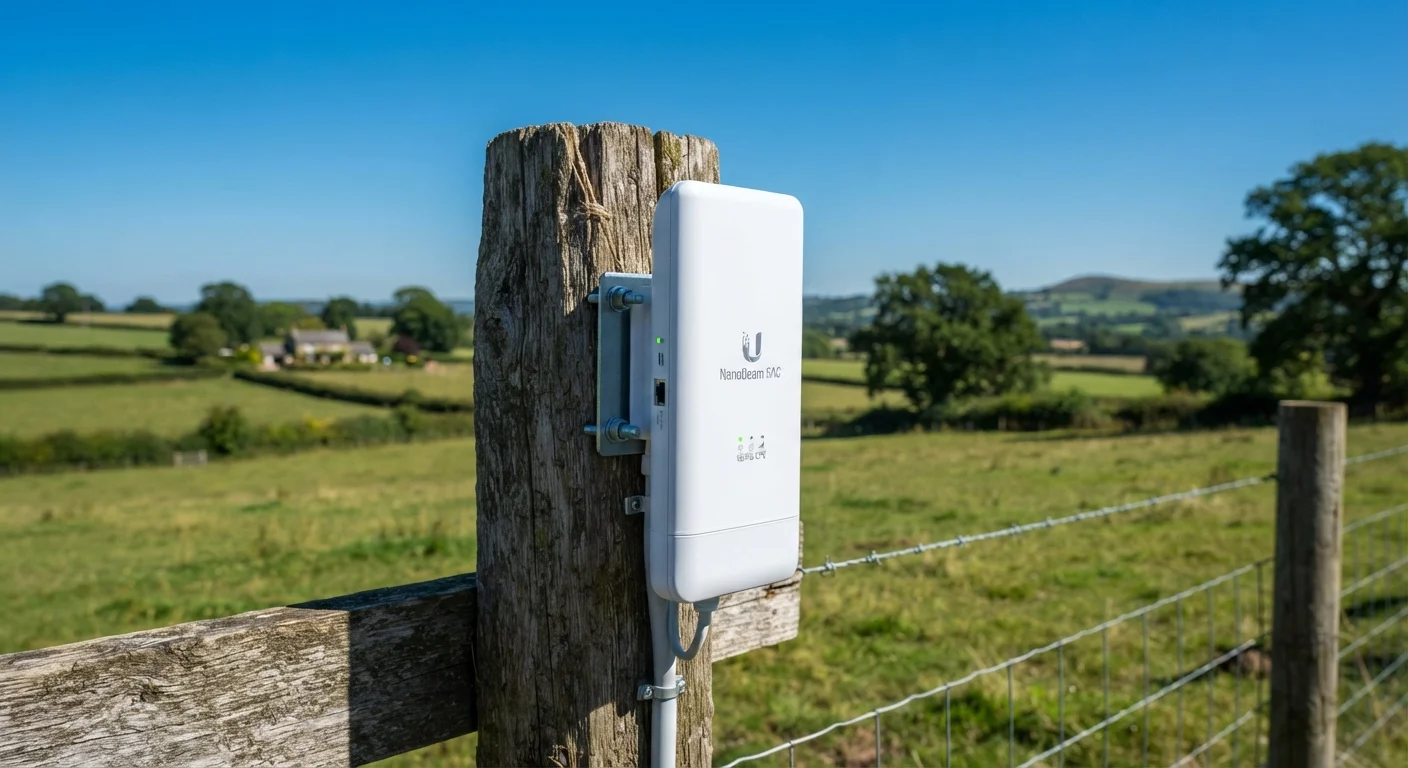
Fixed wireless internet sends a radio signal from a ground-based tower to a small receiver mounted on your home or property. The receiver connects to a router inside, and you get internet access over that radio link. Because the signal travels only a few miles rather than hundreds, latency is generally low and steady. The trade-off is coverage: a provider needs to have a tower within range of your address, and clear line of sight between the tower and your receiver helps signal quality significantly.
Coverage and availability
Satellite internet has a clear advantage in geographic reach. LEO constellation services now cover most of the continental United States, including areas where no other broadband option exists. If you are in a valley with no nearby towers or in a region where providers have not built out infrastructure, satellite may be your only realistic path to broadband speeds.
Fixed wireless coverage is more uneven. Rural electric cooperatives and regional internet providers operate many fixed wireless networks, and coverage maps vary widely by state and county. The Federal Communications Commission maintains a broadband map that can help you identify which providers report serving your address, though self-reported coverage maps are not always precise. Checking directly with local providers is a more reliable step.
Checking your actual address coverage
Coverage maps published by providers and government databases give a general picture but are not always accurate at the individual address level. Before making a decision, call local providers directly and ask whether your specific address can be served. Neighbors on the same road can sometimes have different results due to terrain differences.
Speed, latency, and reliability
Advertised download speeds for both technologies can reach 25 to 100 Mbps or more on current plans, though actual speeds depend on network congestion, weather, and your equipment setup. Satellite capacity is shared across many users on a given orbital zone, so speeds can drop during peak evening hours. Fixed wireless networks also share capacity among nearby subscribers, and performance can vary by provider and tower load.
Latency is the delay between sending a request and receiving a response, measured in milliseconds. It affects video calls, gaming, and anything requiring a quick back-and-forth with a server. Fixed wireless generally holds an edge here because of the shorter signal path. LEO satellite has closed much of the gap with geostationary systems, but fixed wireless still tends to be more consistent for real-time applications.
Weather affects both options. Heavy rain, snow, and dense cloud cover can degrade satellite signals, a phenomenon sometimes called rain fade. Fixed wireless signals can also weaken in heavy precipitation or when foliage thickens seasonally around the receiver.
| Criterion | Satellite internet | Fixed wireless internet |
|---|---|---|
| Geographic reach | Near-nationwide with LEO systems | Limited to tower coverage areas |
| Typical latency | 20 to 60 ms (LEO); 500+ ms (geostationary) | 10 to 40 ms |
| Weather sensitivity | Moderate (rain fade possible) | Moderate (rain and foliage can affect signal) |
| Equipment cost | Often higher; proprietary hardware | Generally lower |
| Line-of-sight requirement | Clear view of sky needed | Clear path to tower preferred |
| Data policies | Varies; some plans throttle after threshold | Varies; some plans offer unlimited |
Costs and equipment
Both services typically involve an equipment cost, a monthly service fee, and sometimes an installation fee. Satellite services often require purchasing or leasing proprietary hardware, and some providers charge several hundred dollars for the dish and modem. Fixed wireless installations usually involve a receiver, mounting hardware, and an indoor router, with costs that vary by provider.
Monthly fees for rural broadband tend to run higher than urban cable plans, and data usage policies differ across providers. Some plans include a high-speed data allotment before speeds are slowed; others offer unlimited data at a fixed speed. If your household streams video regularly or has people working from home, reviewing the data terms before committing to a plan is worth the time. This article is general educational information; actual pricing and plan terms should be confirmed directly with providers.